Finish guide
Stained concrete
Acid or water-based stain soaked into concrete for rich, marbled color.
- Best for
- Interior floors, basements, covered patios and existing slabs
- Typical installed cost
- $3 to $14 per sq ft
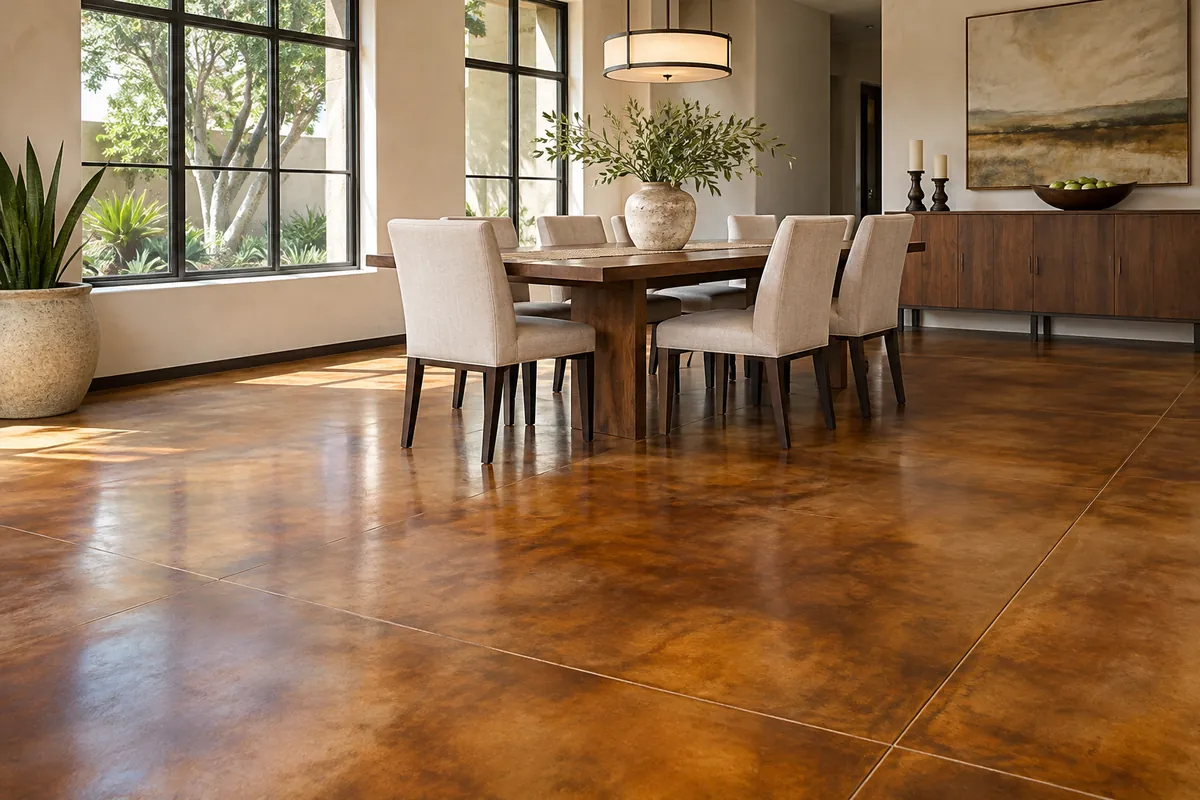
Concrete stain colors the slab itself instead of coating it. Acid stains react chemically with the lime in the concrete to create translucent, marbled earth tones: browns, tans, terracotta and soft greens. Water-based stains sit in the pores and come in a much wider range of colors, including grays, blacks and blues, with a more even look.
Because no two slabs react quite the same way, every acid-stained floor is one of a kind. That variation is the whole appeal, and it's also why you should always ask for a test patch.
How it's done
- Clean and prep. The slab is cleaned of dirt, paint, glue and sealers. Old coatings must come off or the stain won't take.
- Repairs. Cracks are filled. Note that patches will stain differently from the original concrete.
- Test area. A good installer stains a small hidden area first so you can see the real color.
- Apply stain. Stain is sprayed, brushed or rolled in one or more coats. Saw-cut lines or stencils can add tile or rug patterns.
- Neutralize and rinse. Acid stain residue is neutralized and cleaned off.
- Seal. A sealer, and indoors often a floor wax or finish, protects the color and sets the shine.
Pros and cons
Pros
- Uses the slab you already have
- Rich, natural-looking color that won't peel off
- Easy to clean; great with radiant heat
- One of the most affordable decorative finishes
Cons
- Color results are hard to predict exactly
- Stains won't hide cracks, patches or old damage
- The sealer or wax needs regular upkeep
- Hard and cool underfoot
What it costs
A simple one-color stain with sealer can run as little as $3 to $6 per square foot. Multi-color designs with saw cuts, stencils or scoring commonly reach $10 to $14, and elaborate custom work can go higher. The condition of your slab matters most: removing old flooring glue or paint adds cost before staining begins.
Updated November 19, 2026