Guide
Caring for decorative concrete
Cleaning, resealing and winter care that keep color and shine looking new for years.
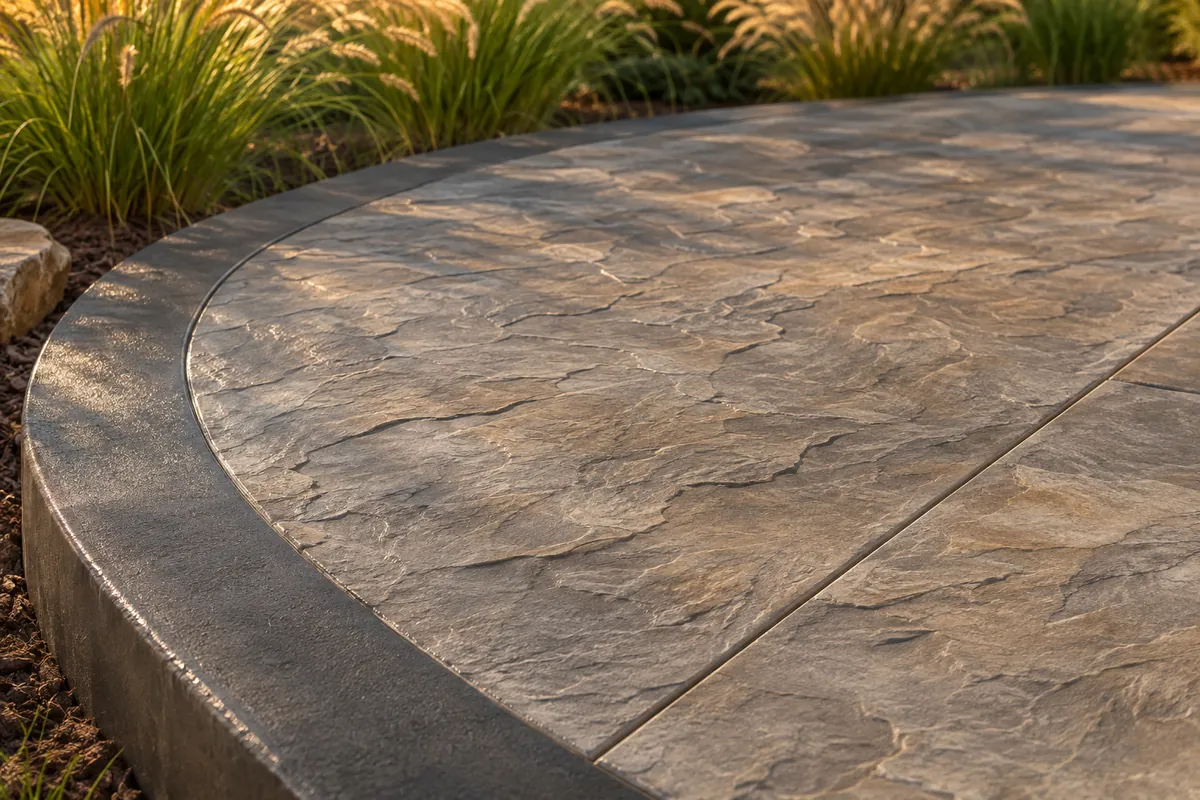
Decorative concrete lasts for decades, but the color and shine depend on the sealer. Most problems people blame on the concrete, like faded color, white haze or flaking, are really sealer problems.
Routine cleaning
- Sweep regularly and rinse outdoor surfaces with a hose.
- Use a pH-neutral cleaner. Avoid harsh acids and degreasers that can dull sealer.
- Clean up oil, grease and leaves before they stain.
- Indoors, dust-mop and damp-mop. Polished floors may need occasional burnishing.
When to reseal
Outdoor stamped and stained concrete usually needs resealing every 2 to 3 years, sooner in harsh sun or heavy traffic. Signs it's time: color looks faded, water no longer beads up, or the surface looks dull and dry.
Sealer types in plain English
- Acrylic sealers: the most common for outdoor decorative concrete. Affordable, enhance color, and easy to reapply.
- Penetrating sealers: soak in and leave little or no shine. Good where slip resistance matters most.
- Polyurethane and epoxy: tougher films, mainly for interior floors and coatings.
Winter tips
- Use plastic shovels and avoid metal blades that scrape the sealer.
- Skip deicers with ammonium nitrate or ammonium sulfate, which attack concrete. Sand gives traction without damage.
- Don't use any deicer on concrete less than a year old.
Fixing common problems
- White, cloudy sealer: usually trapped moisture. A pro can often re-dissolve it with solvent or xylene.
- Peeling sealer: too many thick coats or the wrong product. It may need stripping before resealing.
- Hairline cracks: normal in concrete. Ask a pro before filling them; filler often shows more than the crack.
Updated November 19, 2026